
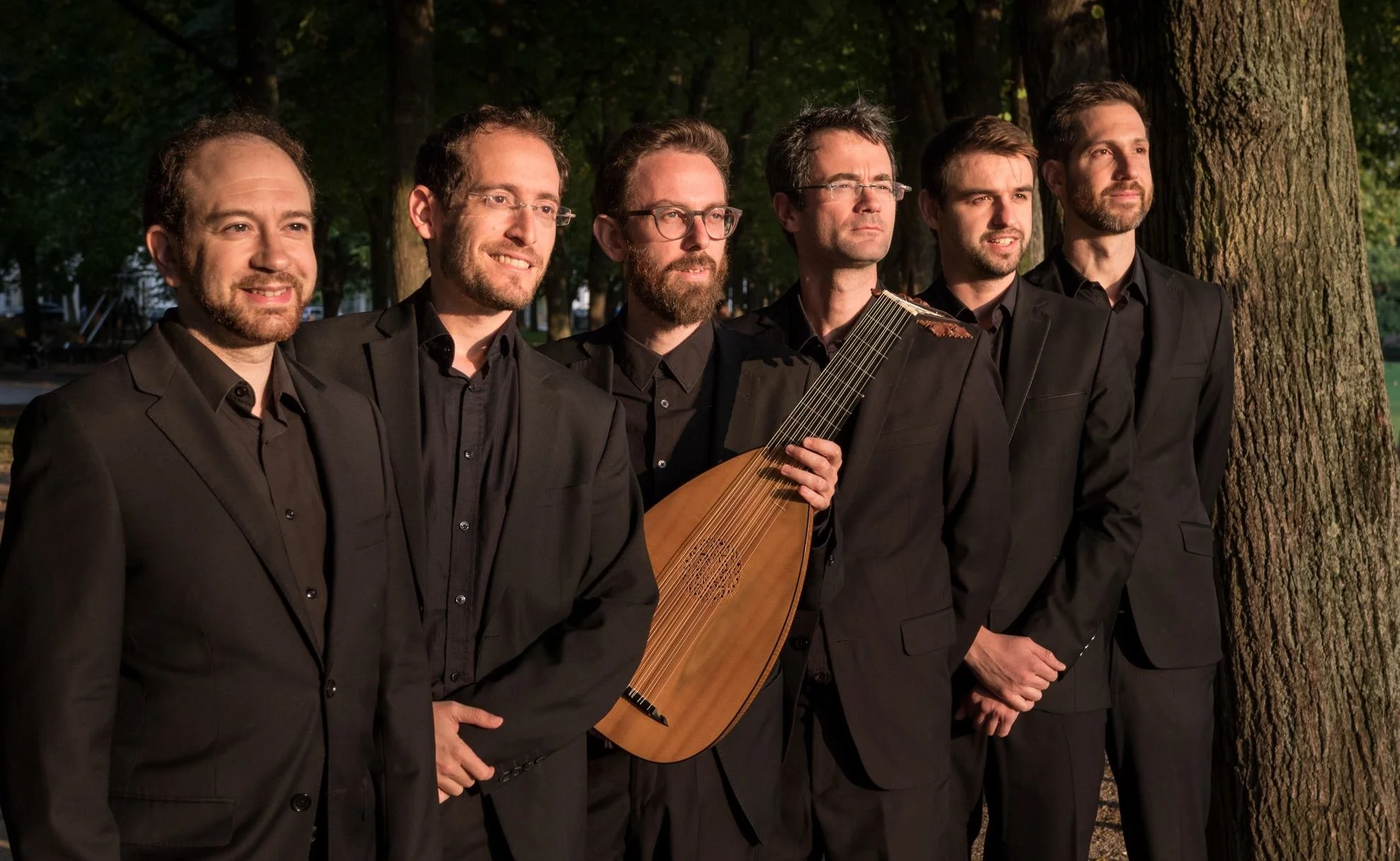
Profeti della Quinta
Elam Rotem, director
From the Synagogue to the Palace
Sunday, June 21, 2026 | 3:00 PM
The Indiana History Center
450 West Ohio Street, Indianapolis, IN 46202
(Pre-Concert Chat: Begins 30 minutes before the concert)
PURCHASE IN-PERSON OR LIVESTREAM TICKETS
TO SEE Profeti della Quinta HERE:
Elam Rotem, bass, harpsichord, and musical direction
Doron Schleifer, countertenor
Lior Leibovici, tenor
Andrea Gavagnin, countertenor
Loïc Paulin, tenor
Ori Harmelin, theorbo
Our program brings together two composers who are rarely presented side by side. This is due to their very different specialties; Claudio Monteverdi is mostly known thanks to his dramatic music, which is considered today as the birth of opera, while Salomone Rossi is known, if at all, as the Jewish musician who composed an intriguing collection of Hebrew Liturgical music.
Yet in fact, strong connections and similarities exist between the two. They were almost the same age, and both served for many years at the Gonzaga court in Mantua, one of the most important musical centres of Europe. Both composed a great number of madrigals, using lyrics by the same poets, in which they explored the expression of poetry in music. Both progressed with time and musical taste, and pioneered the “new” musical style with basso continuo. Moreover, they must have known each other personally and made music together: Rossi played at court where Monteverdi was the “Maestro della musica”, and the two collaborated in composing an Intermedio for the Gonzagas. Rossi’s sister, known as “Madama Europa”, was a singer who performed in Monteverdi’s opera L’Arianna and probably in other works of his as well.
We invite you to enter the diverse musical soundscape created by these two composers: passionate madrigals and playful duets alongside dignified Jewish prayers. Rossi, who contributed significantly to this diversity, knew Monteverdi’s music well. Yet we are left wondering: has Monteverdi ever passed by Rossi’s synagogue and heard his colleagues’ unique Hebrew compositions?
PROGRAM
Salomone Rossi (ca. 1570 – ca. 1630)
Lamnatséaḥ 'al hagitít Psalm 8
Elohím hashivénu Psalm 80:4, 8, 20
Shir hama'alót, ashréy kol yeré Adonái Psalm 128
Hashkivénu Abendgebet
Ori Harmelin
Variations on ‘La Monica’
Salomone Rossi
Cor mio, deh non languire
Udite, lacrimosi spirti d’averno
Rimanti in pace
Mizmór letodá Psalm 100
Haleluyáh, Halelì nafshì 'et 'adonái Psalm 146
Intermission
Luzzascho Luzzaschi (1545–1607)
Io veggio pur pietate
Morir non puo'l mio core
Claudio Monteverdi (1567-1643)
Lamento della ninfa
Ori Harmelin
Passacaglia
Claudio Monteverdi
Lamento d’Arianna
Zefiro torna, e 'l bel tempo rimena